
Learn how to desolder components
The skill of desoldering is a very useful skill to possess. If you have learned how to solder, you will at some point need to know how to desolder components.

Sometimes a component is soldered in the wrong place. Sometimes a faulty component needs replacing. You can cause a lot of damage with a hot soldering iron. Usually by applying too much heat.
It’s perfectly possible to remove a component without damaging it. Done carefully desoldering isn’t that difficult. You don’t want to cause damage either through heat or mechanically by using too much force. Sometimes a part is already damaged so damaging it further won’t make any difference but the biggest problem that I have encountered or at least used to in the early days is damaging the board.
Don’t forget to keep your tip cleaned and tinned. This is just as important with desoldering as it is with soldering.
General desoldering
If you’re looking for more detailed information about desoldering in general I have an article Learn how to desolder – A beginners guide. This covers lots of ways to desolder in detail.
Tip
Take your time, you don’t have to get all the solder off in one go. Let everything cool down and try again.
You can replace components but PCB damage is more difficult to put right. The reason circuit boards get damaged in desoldering is because of the heat that is used.
You must be careful not to apply the iron longer than you would for normal soldering. If you have to, stop and let it cool down and have another go.

The copper on a printed circuit board is bonded onto the insulating board material. This is usually fibreglass or SRBP (synthetic resin bonded paper) using, basically, a type of glue that gives way if overheated. Once the track or pad has come away from the board the component’s movement can break the track.
How to desolder components – PCB pads
The pad can also get broken when you try to remove a component that hasn’t been completely desoldered. The remaining solder can pull off a pad or part of it.
This is certainly something you DON’T want to do. It can prove very difficult to try to repair a heat-damaged circuit board. Most methods are at best Heath Robinson and don’t provide long-term reliability so don’t damage them in the first place. If a component is damaged or is so cheap as not to bother reusing it can be easier to remove if you essentially damage it first.

Things with lots of leads are usually prime candidates for this method. Basically, if you cut the leads off the component but leave enough in the board it can be a lot easier to remove than if you leave them.
This was the first way I was taught to desolder. It can actually be done without using any specific desoldering tools so it’s the first method I’ll discuss.
How to desolder components with a soldering iron
To remove something such as a resistor you can cut the component lead near to the body. Do this on both sides of the component to get it out of the way. Then trim the leads close to the board component side.
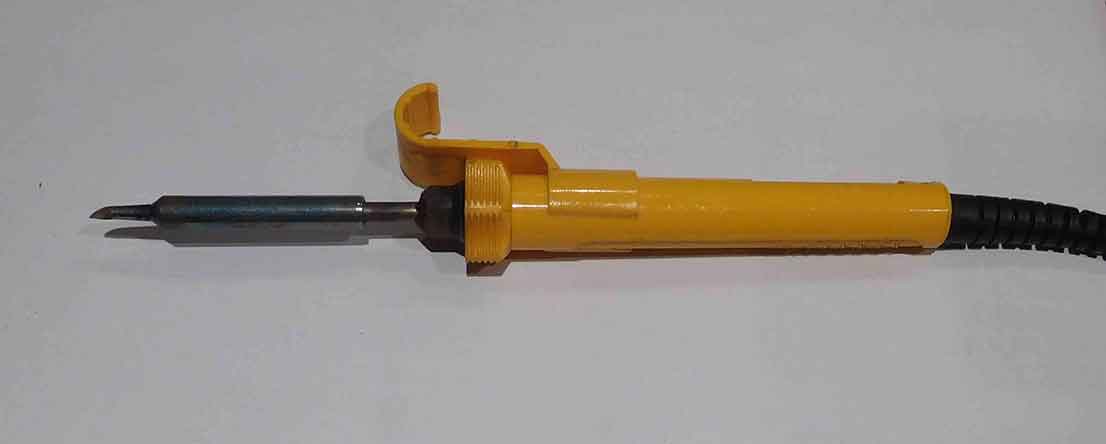
If you turn the board around now to the pad side and apply your soldering iron to the joint along with some fresh solder as the solder and the old joint melts pull the tip of the iron away and the remaining component lead will usually come away with it.
Do it quickly as if you were re-soldering and you won’t damage the board. This is one of the most basic techniques of how to desolder components.
How to desolder components with a desoldering pump
There are other ways of using tools that make removing components easier. One of the most popular is to use a desoldering pump. For a guide on buying and using a desoldering pump read here.

The tool above is the best I’ve found for desoldering components from circuit boards. For more details have a look at my guide on the best desoldering tool.
Learning how to desolder components is definitely a skill that will improve with practice so give it a go on old circuit boards first.
One of the safest ways of desoldering is to use solder wick. This is also known as solder braid. Further details of this method are shown on the page What is the best desoldering braid?

Tip
You can make desolder braid suck up more solder by using flux. In my opinion, flux is an essential substance to make sodering and desoldering easier.
The best tool for desoldering is a desoldering station. For more information check out my guide on desoldering stations.

The tool above is a cost-effective desoldering tool. it is basically a soldering iron and a desolder pump combined.
These are particularly useful for taking large amounts of solder from a component soldered onto a circuit board. you can then use other techniques like braid that are better at soaking up the final bits that a tool like this can’t quite get.
If you need more information and tips about desoldering have a look at my desoldering techniques guide. This is more detailed and covers each method in greater depth.

“Hi, I’m Graham Moore and I’ve been building electronic projects since I was 12. I had a fascination for old radios and taking them to pieces but when my Nan bought me an electric soldering iron, I realised with a few components I could build stuff.
Learning to solder opened up many doors for me as electronics also became a career. I hope you get as much from it as i did”.